
Article
Cot Safety: EN 716, Carry Cots and Safe Sleep
21 Nov 2026
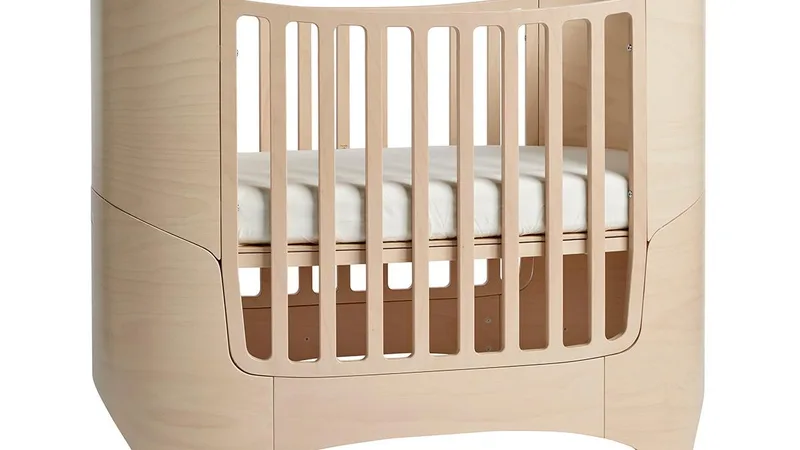
Choose a baby cot that passes a recognised safety standard such as EN 716 — which tests frame stability, bar spacing and mattress fit — and keep the cot a "clear" sleep space, following safe-sleep principles: baby on their back, on a firm, flat, well-fitting mattress, with nothing soft in the cot.
Per BSI, EN 716-1 specifies safety requirements for children's cots for domestic use with an internal length greater than 900 mm but not more than 1,400 mm. It does not apply to carry cots, cribs or cradles, which have separate European standards — for example, carry cots under EN 1466. For other types of children's beds, check the standard named on the label or in the product documentation, or ask the retailer.
What EN 716 tests
EN 716-1:2017 (with the 2019 corrigendum) is the CEN European standard for home cots. It covers five main areas:
- Materials — EN 716-1 requires accessible parts to meet the relevant EN 71-3 limits on migration of certain elements; textiles, coated textiles and plastics also have flammability requirements under EN 71-2 and EN 1103
- Stability — both when newly assembled (initial stability) and after use or impact (final stability)
- Holes, gaps and openings — no opening inside the cot through which the child's head or small body parts could pass or become trapped, including openings where the head could be caught on the outside
- Shear and squeeze points, snag points, locking systems — gaps where a child's hand could be pinched between moving parts must be safe, snag points must not exist, and the locking systems of folding frames or movable sides must actually work
- Use and marking — instructions must be complete, and the product marking must carry the required information
Bar spacing
EN 716-1 requires that openings, holes and gaps in the cot be checked with the test tools defined by the standard (per EN 716-2), so that a child's head or small body parts cannot pass through or become trapped.
The standard's test tools, not a home measurement, are what decide. Review the bar-spacing test results in the product documentation, or ask the retailer which standard the product has been tested against.
Mattress fit
- EN 716-1 has requirements on mattress size — the cot is designed for a specific mattress. Fit the right size so there is no gap wide enough for a hand or foot to get trapped
- Never add a second mattress or a foam topper — the 2019 corrigendum added a warning about the risk of putting two mattresses in the cot into the instructions for use
- Per NHS advice: the mattress should be firm, flat and waterproof. Try the mattress with your baby on it — the head should not sink in more than a few millimetres. If it is too soft, the baby can overheat more easily
- The NHS advises buying a new mattress where possible. It says a mattress from your own home may be reused if stored clean, dry and smoke-free; this advice does not verify mattresses from other homes, so follow the cot and mattress manufacturer's guidance.
Casters and locks
- A cot with casters must meet the EN 716-1 stability requirements — check the product's stability information, and always lock the brakes before putting your baby in
- A folding cot must be fully locked before you put your baby in it — locking and locating devices are part of the EN 716-1 requirements
Safe-sleep basics
The standard for the cot does half the job; the other half is how you use it:
- Always on their back — place the baby on their back for every sleep (AAP)
- Firm, flat surface only — the sleep surface must not indent and must not incline more than 10 degrees. If the baby falls asleep in a stroller or car seat, move them to a firm, flat surface as soon as possible (AAP)
- Room-sharing, not bed-sharing — keep the cot in your room, at least for the first six months, but do not sleep in the same bed as the baby, and never on a sofa or armchair (AAP, NHS)
- Keep the cot "clear" — no bumpers, pillows, duvets, soft toys, or cushioned pods/nests, which raise the risk of the face being covered or the baby overheating (NHS)
- A sleeping bag can reduce the risk of loose bedding covering the face. For a standard room temperature of 16–20°C, the NHS lists a 2.5-tog bag; follow the manufacturer's fit guidance and use no extra bedding. If you use a blanket, put the baby's feet at the foot of the cot and tuck it in firmly, no higher than the shoulders (NHS)
- No cords or hanging items within reach — keep electric cords, blind cords and hanging toys out of the baby's reach (AAP)
Checklist before first use
- Check the label or documentation for the standard it follows (e.g. EN 716)
- Assemble per the instructions; verify all parts are present, no loose screws, no sharp edges
- Check the documentation for the standard and test results (including bar spacing); check the casters and brakes, the locking system and the sides
- Fit the designed mattress — never add foam or a second mattress
- Place the cot away from curtains, cords and hanging items
FAQ
What is the difference between a cot and a carry cot? A domestic cot is a bed intended for home use; EN 716-1 applies to cots with an internal length greater than 900 mm and not more than 1,400 mm. A carry cot is a portable sleeping place carried by hand for a baby who cannot yet sit unaided, roll over or push up on their hands and knees, with a maximum weight of 9 kg; it is covered by EN 1466 — the basic safety principles, such as openings and mattress fit, are similar.
Where do I see the bar-spacing assurance? EN 716-1 requires openings, holes and gaps to be tested with the tools defined by the standard (per EN 716-2) — a home measurement cannot substitute for that test. Check the label or documentation for the standard the product passed, or ask the retailer.
Are metal bars or mesh sides safer? EN 716-1 includes requirements for mesh openings. Check the product documentation for the applicable standard and test results; the side material alone does not prove compliance.
Can I add a foam topper for extra comfort? No — the 2019 corrigendum added a warning about the risk of a second mattress, and AAP/NHS advice requires the sleep surface to be firm and flat.
Is a second-hand cot OK? A visual check cannot confirm that a used cot complies with a safety standard. The AAP says not to use a cot that is broken, missing hardware or instructions. Ask the manufacturer or retailer for the model's documentation, and do not use it if it is damaged or parts are missing.
See them in person
If you want to see cots or baby gear in person, The Little Store lists Bangkok branches; contact the team to check which models are currently on display.
References
- BS EN 716-1:2017+AC:2019 (product page) — BSI (British Standards Institution)
- EN 1466:2023 — Child care articles, Carry cots and stands for domestic use, Safety requirements and test methods — CEN (via iTeh Standards)
- How to Keep Your Sleeping Baby Safe: AAP Policy Explained — AAP HealthyChildren.org
- Safe sleep advice for babies — NHS (Best Start in Life)
- EN 716-1:2017 preview — Furniture — Children's cots and folding cots for domestic use — Part 1: Safety requirements (iTeh)