
Article
GOTS Organic Cotton: What the Label Does and Doesn't Say
20 Nov 2026
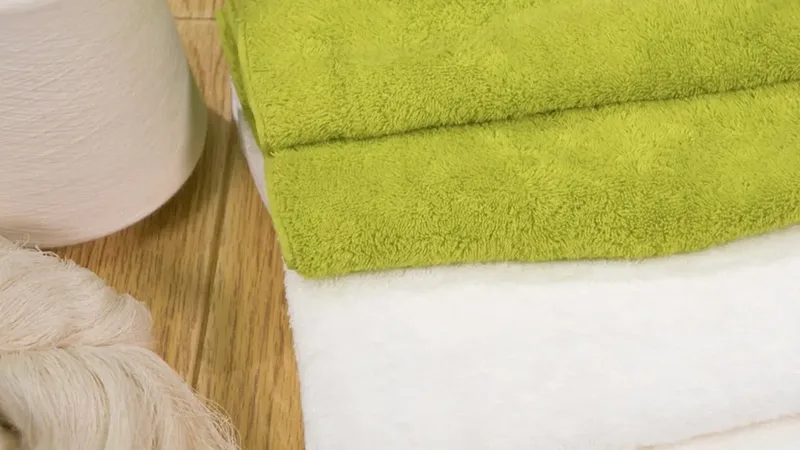
"Organic cotton" is cotton grown under organic agricultural standards that restrict synthetic pesticides and fertilizers and do not use GMO seeds. GOTS (Global Organic Textile Standard) is the certification that follows the product after harvest: every facility in the chain — spinning, weaving, dyeing, sewing, packing — must be audited, use only approved chemicals, and meet social standards before the finished garment may carry the organic label.
If you are still deciding between cotton, TENCEL™ and bamboo-derived fibres, start with our baby fabric guide.
What "organic cotton" means
- GOTS requires organic fibres to come from farms certified to an organic standard by a GOTS-approved certification body
- Organic agriculture restricts synthetic pesticides and fertilizers, does not use GMO cotton seeds, and manages soil and water to protect the environment (per the organic standards GOTS references)
- GOTS covers several organic fibres, not just cotton — for example wool, linen, silk and hemp
What GOTS actually certifies
GOTS is a voluntary international standard run by Global Standard gGmbH (a non-profit). More than 17,000 certified facilities worldwide cover the entire post-harvest chain:
- Facility-by-facility audits — every step (spinning, weaving, knitting, bleaching, dyeing, printing, sewing, packing) is certified by an independent GOTS-approved certification body, with traceability across the whole chain
- Chemicals — only approved substances may be used; there are clear lists of prohibited and restricted substances (including certain flame retardants), and GOTS sets limit values for residues in finished products
- Environment — resource efficiency (water, energy), air emissions and greenhouse-gas management, waste and wastewater management, plus packaging rules (no PVC, plastic minimised)
- Social and labour — no forced or child labour, non-discrimination, freedom of association and collective bargaining, occupational safety and health, working hours, and wage criteria
- Product quality — minimum technical quality parameters and limit values for chemical residues in finished goods, with special requirements for textiles in contact with the body or food
The current published version is GOTS v8.0.
What the GOTS label does NOT promise
Five common misconceptions:
- "Organic" does not mean 100% — goods with at least 95% certified organic fibres may carry the "Organic" label; goods with 70–94% must say "Made with (x%) organic materials" and state the percentage
- It is not a product safety test — OEKO-TEX STANDARD 100 tests the finished product (yarns, buttons, accessories included) against a list of more than 1,000 harmful substances; GOTS audits facilities and processes. Different scopes — they complement each other
- No softness or absorbency guarantee — GOTS quality criteria are minimums; hand-feel depends on the fibre and the weave, not on the certification
- It is not a brand-wide certification — certification covers defined goods and production scopes, not a brand's whole product line
- "Organic farming" is not zero-chemical — organic standards restrict chemical inputs rather than eliminate every chemical, and GMO cotton is not permitted
GOTS vs OEKO-TEX: which one to look for
Two labels with different purposes:
- What it certifies — GOTS: organic fibres across the supply chain (environment + labour) / OEKO-TEX STANDARD 100: finished-product safety
- Scope — GOTS covers each facility in the chain / OEKO-TEX covers the product including every component
- Focus — GOTS restricts the chemicals used in production / OEKO-TEX tests residues of more than 1,000 substances, and the closer the skin contact the stricter the class (Class 1 for infant articles is the strictest)
- Labelling — GOTS: "Organic" (95%+) or "Made with x% organic" (70%+) with a certification number / OEKO-TEX: STANDARD 100 with a product class
- In practice — one product can carry both; for baby clothing, both labels give the most complete assurance
How to verify a GOTS label
- A GOTS label must show the certification number of the certified entity
- The certifier must be on the list of GOTS-approved certification bodies published on the official GOTS site
- A product marked "organic" with no certification number is a marketing claim, not a certified product
- Goods with less than 95% organic fibres must state the percentage clearly on the label
FAQ
Q: For baby products, is GOTS or OEKO-TEX better? A: They matter in different ways — OEKO-TEX STANDARD 100 Class 1 is a safety test for products with close skin contact (including infant articles), while GOTS certifies the origin of the organic fibre and the standards across the whole supply chain. A product carrying both is the strongest position (for example, Sæson Baby on bclink.co uses organic cotton and TENCEL™ fibres and lists OEKO-TEX STANDARD 100 certification, per bclink.co).
Q: Does "organic" mean 100% organic cotton? A: No — the "Organic" label requires at least 95% certified organic fibres; 70–94% must be labelled "Made with (x%) organic materials".
Q: Does GOTS control dyes and finishing? A: Yes — chemicals used in every production step, including dyeing, printing and finishing, must be on the approved list; there are separate prohibited and restricted lists, and GOTS also sets residue limit values for finished products.
Q: Is GOTS fabric softer or more absorbent than conventional fabric? A: GOTS makes no performance promise — softness and absorbency depend on fibre and weave, not on certification. For example, Air Kaol (a Japanese towel brand carried by BCLINK) uses SUPER ZERO® yarn, which combines organic cotton with water-dissolving fibres for high absorbency.
Q: Where can I see BC Link's brands in Bangkok? A: The Little Store in central Bangkok is BC Link's own baby and kids store; ask the team which organic cotton products are in stock.
Talk to BCLINK
BCLINK works from a textile background and curates brands for modern parents. When choosing clothing or fabric for a baby, starting from two labels — GOTS for the origin of the fibre, and OEKO-TEX for product safety — is a sound foundation. If you want to see products in person, visit The Little Store, BC Link's baby and kids store in central Bangkok.