
Article
Baby Pacifier Guide: Choosing, Cleaning and Weaning
21 Nov 2026
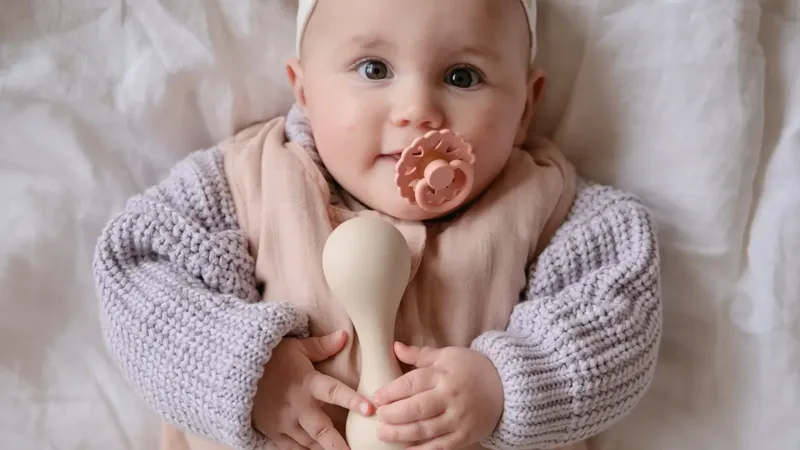
A pacifier can meet a baby's need to suck for comfort beyond feeding. The American Academy of Pediatrics (AAP) recommends offering one at naps and bedtime to reduce the risk of SIDS. It is optional; do not force it if your baby refuses.
How a pacifier may help
Babies are born with a need to suck, which can also soothe them. If a family chooses to use a pacifier, AAP recommends offering it at naps and bedtime:
- Offer it at naps and bedtime — AAP’s 2022 safe-sleep guidance recommends offering a pacifier at these sleep times to reduce SIDS risk.
- If it falls out — Once your baby is asleep, you do not need to put it back in (AAP).
- Do not force it — If your baby refuses, do not insist; continue the other safe-sleep steps in the AAP guidance.
When to start
- Breastfed babies — AAP advises waiting until breastfeeding is going well before offering a pacifier; this usually takes about 3–4 weeks, though the timing can vary.
- Babies who are not breastfed — AAP says a pacifier can be offered whenever the caregiver chooses.
- Do not replace a feed — Offer a pacifier only when you are sure your baby is not hungry; do not use it to delay a meal (AAP).
How to choose a safe pacifier
Per AAP safety advice:
- Choose a one-piece model — AAP advises choosing a pacifier that cannot come apart; a model molded from one piece is particularly safe.
- Do not use a bottle nipple as a pacifier — If a baby sucks hard, the nipple can pop out of the ring and cause choking (AAP).
- Check the shield — It should be at least 3.8 cm (1.5 inches) across, made of firm plastic and have ventilation holes (AAP).
- Follow the age range — Older children may fit a newborn pacifier fully into their mouth and choke; follow the label (AAP).
- Inspect and replace — Check periodically and replace a pacifier if its rubber changes colour or tears; follow any maker expiry date (AAP).
Cleaning and care
- Clean it as directed — AAP advises boiling or dishwashing a pacifier before first use if the product allows it, cleaning it this way frequently until 6 months, then washing with soap and rinsing. Squeeze water from the nipple with clean hands before giving it to the baby to avoid a burn.
- Replace a damaged pacifier — Stop using it if the rubber changes colour or tears, and follow the maker’s expiry date (AAP).
What not to do
- Never attach cords or clips — Do not tie a pacifier around a baby’s neck or hand, or attach it to the crib, clothing, blankets or toys (AAP, Lullaby Trust).
- Do not sweeten it — Do not coat a pacifier with honey, sugar or another sweetener; AAFP notes risks of tooth decay and honey-associated infant botulism, and the Lullaby Trust also advises against sweeteners.
- Keep it for sleep times — The Lullaby Trust advises not offering a pacifier during awake time.
- Do not punish or tease — AAP advises against harsh words, teasing or punishment when helping a child stop; use gentle reminders and positive reinforcement.
When to stop, and how
- Begin easing off between 6 and 12 months — The Lullaby Trust recommends gradually withdrawing a dummy during this period to reduce possible longer-term problems such as ear infections and tooth misalignment.
- Health risks after 12 months — The American Family Physician review says the optimal age to stop is unknown, but health risks appear to increase after 12 months.
- Watch for dental changes — AAP says strong sucking beyond ages 2–4 may affect mouth shape or tooth alignment. If you notice changes, talk to your child’s pediatrician or pediatric dentist.
- Wean without pressure — AAP suggests praise and rewards, star charts and gentle daytime reminders; avoid harsh words, teasing or punishment, and distract a child who sucks from boredom.
FAQ
Does a pacifier reduce SIDS risk? AAP recommends offering one at naps and bedtime to reduce risk. It is optional; if your baby refuses, do not force it, and continue the other safe-sleep guidance.
My baby is breastfed — when can I offer a pacifier? AAP advises waiting until breastfeeding is going well, usually about 3–4 weeks, though timing varies.
The pacifier fell out while my baby slept — should I put it back? No. AAP and the Lullaby Trust say there is no need to replace it once the baby is asleep.
When should my child stop using a pacifier? The Lullaby Trust recommends easing off between 6 and 12 months. AAFP says health risks appear to increase after 12 months, and AAP notes that strong sucking beyond ages 2–4 may affect tooth alignment.
Can I sweeten the pacifier to get my baby to take it? No — honey is never for babies under one (botulism risk), and any sweetener causes tooth decay.
Choose the right pacifier for your baby
The Little Store is a baby and kids store in central Bangkok. Contact the team to ask which pacifier brands and models are currently available before visiting.
References
- Sleep-Related Infant Deaths: Updated 2022 Recommendations for Reducing Infant Deaths in the Sleep Environment — AAP
- Pacifier Safety — American Academy of Pediatrics (HealthyChildren.org)
- Baby Pacifiers & Thumb Sucking: What Parents Need to Know — American Academy of Pediatrics (HealthyChildren.org)
- Pacifiers: Common Questions and Answers (2025) — American Family Physician
- Dummies — The Lullaby Trust