
Article
Child Car Seat Guide: UN R129 vs R44 and Thai Law
20 Nov 2026
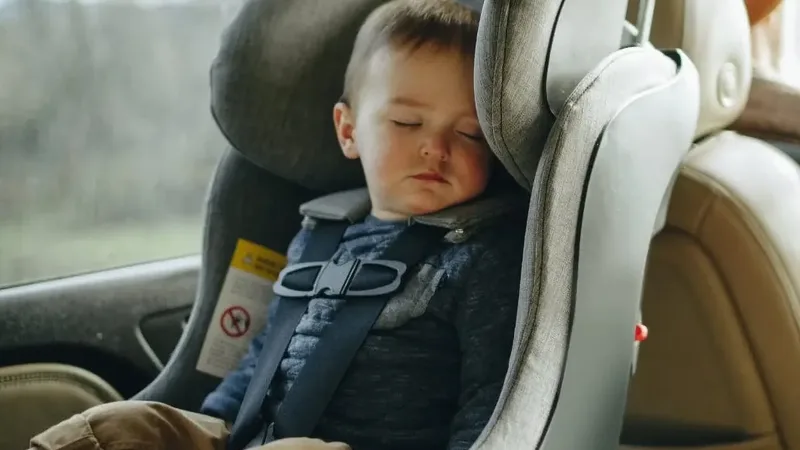
In Thailand, children aged 6 or under must use a child safety seat or special seat, or another protective method set by the police notice. If a qualifying seat cannot be arranged, the notice gives alternative precautions; public transport and passenger-for-hire vehicles are exempt from the seat requirements but still follow those alternative measures. UN Regulation No. 129 (R129), which includes the i-Size category, is newer than No. 44 (R44). R129 classifies seats by a child’s height, includes a side-impact test, and requires children under 15 months to travel rearward- or lateral-facing.
What a child restraint is, and who sets the standard
A car seat is a "child restraint system" in legal terms: a seat or restraint system for a child in a vehicle, designed to protect the child in a crash or sudden stop. A 2023 National Police notice names three accepted forms: rear-facing and forward-facing child restraint seats, and a booster seat without a backrest.
The international approval standards (UN Regulations No. 44 and No. 129) are developed in the World Forum for Harmonization of Vehicle Regulations (WP.29) of the UN Economic Commission for Europe (UNECE). A seat approved under a UN Regulation carries an approval mark identifying the regulation, approving country and approval number. The seat label also shows its approved size range and, where applicable, maximum weight.
What Thai law requires
Section 123 of the Land Traffic Act No. 13 (Amendment) B.E. 2565 requires children aged 6 or under to use a child safety seat or special seat, or another protective method specified by the police. The notice defines accepted seats, including a backless booster, and sets rules for passengers 135 cm tall or shorter who cannot be properly restrained by a seat belt.
The 2023 National Police notice says that if it is not possible to seat a child aged 6 or under in a qualifying restraint or special seat, the driver must follow three rules:
- Drive slowly, with safety in mind, and keep near the left edge of the road.
- The child must sit in the rear seat — in a pickup or space-cab truck the child may sit in the front seat, but never in the truck bed.
- A responsible adult must be present, or a lap belt must be used.
The notice also requires a restraint to meet any applicable Thai Industrial Standard (มอก.) for that type.
Public transport and passenger-for-hire vehicles are exempt from the specified seat requirements, but the notice applies its alternative safety measures to those trips as well.
R44 vs R129: the two generations
R44 and R129 are two UN regulations that classify child restraints by different criteria.
UN Regulation No. 44 (R44) — the older generation, which groups seats by the child's weight, in five groups:
- Group 0 — children under 10 kg.
- Group 0+ — children under 13 kg.
- Group I — 9–18 kg.
- Group II — 15–25 kg.
- Group III — 22–36 kg.
UN Regulation No. 129 (R129) — a newer regulation that includes the i-Size category and classifies seats by the child's height. Its approval markings identify the size range and, where applicable, maximum child weight. Children under 15 months must use a rearward- or lateral-facing seat. A forward-facing R129 seat is not designed for children below 76 cm; check the exact seat label and manual for its approved range. Rear-facing use may continue beyond 15 months when the seat permits it.
The key differences between the two standards:
- Sizing — R44 uses weight, R129 uses height, so use the weight or height range shown on the approval label to check fit.
- Rear-facing — under R44, Groups 0 and 0+ are rear-facing, while some Group I seats can face forward from 9 kg. Under R129, children younger than 15 months must use rearward- or lateral-facing systems. UNECE advises rear-facing for as long as the particular seat allows; follow its label and manual.
- Side-impact testing — R129 includes a dynamic side-impact test as part of its type-approval requirements.
- Installation — i-Size seats use ISOFIX with an anti-rotation device, such as a top tether or support leg. UNECE notes that ISOFIX installation can reduce misuse.
The two regulations classify seats differently. Check the seat's approval marking and use it only within the range stated on its label and in its manual. In Thailand, any applicable TIS standard must also be met.
How to choose the right seat for your child
- Measure your child's height and weight, then check the seat's specification label. R129 seats show a height range, R44 seats show a weight group — choose a seat whose range covers your child.
- Check the UN approval mark. The approval mark identifies the regulation, approving country and approval number. If you cannot find it, you cannot verify the seat's UN type approval from the mark.
- Check ISOFIX compatibility. Consult your vehicle manual for ISOFIX anchorages and approved seating positions. If a restraint is approved for specific vehicles, verify that your car appears in its fitting list.
- Keep your child rear-facing for as long as possible. Under R129, children under 15 months must use rearward- or lateral-facing seats, and forward-facing seats are not designed for children below 76 cm. For a newborn, check that the seat's approved size range and manual include the child's current size.
- Read the manufacturer's instructions. Follow the seat manual for installation and for securing the child. UNECE reports that child restraints are often installed incorrectly or children are not secured properly, so check the fitting steps each time.
- Rear-facing in the front seat. If you must install a rear-facing seat in the front passenger seat, UNECE states the front airbag must be deactivated.
Common mistakes to avoid
- Switching to forward-facing too early. A child who is not yet within the seat's forward-facing limits must stay rearward- or lateral-facing. Under R129, children under 15 months may not face forward, and forward-facing seats are not designed for children below 76 cm. UNECE advises rear-facing for as long as possible.
- A loose harness. Follow the manual's directions each time you adjust and fasten the harness.
- A seat that does not fit the child. Use a seat only within the child height and weight range approved on its label and described in its manual.
- Installing in the wrong position. Read the manual for each seat: not every seat can be installed in every position in every car.
FAQ
When can my child face forward? Under R129, children under 15 months must use a rearward- or lateral-facing seat; a forward-facing seat is not designed for children below 76 cm. After those minimums, check the exact seat's label and manual. Rear-facing may continue longer.
Does a booster count as a car seat? The 2023 police notice includes a backless booster among the accepted special seats. Check the applicable TIS standard and follow the booster manufacturer's instructions.
What if I do not have a car seat? If a qualifying seat cannot be arranged, follow the three alternative precautions: drive slowly and keep left, seat the child in the rear (a pickup may use the front seat but never the truck bed), and have a responsible adult present or use a lap belt. Public transport and passenger-for-hire vehicles also follow these alternative precautions under the notice.
Can I use a car seat bought in another country? A UN R44 or R129 mark identifies approval under that regulation; it does not by itself show that every applicable Thai requirement is met. Check whether a TIS standard applies to the seat type and verify the product label with the seller.
How do I check a car seat in Thailand is legitimate? Look for the UN approval mark (regulation, approving country and approval number), check the seat's size range and keep the purchase record.
Retailer and product support
Retailers and department stores interested in brands distributed by BC Link can use the business-partner contact page. Consumers who bought a BC Link-distributed product from a retailer can use Product Registration to activate the warranty and after-sales service.